COGNITION

May 11, 2423 | Vol. 42, No. 1

SCIENTISTS CALL INTO QUESTION THE ROOT OF HUMANITY
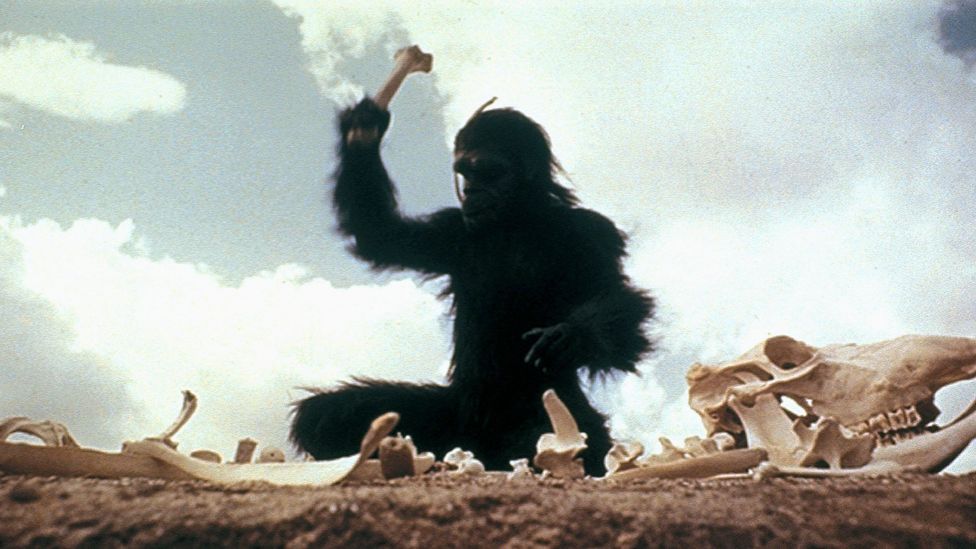
Main article image

Picture Credit: 2001: A Space Odyssey (1968)

In a groundbreaking revelation that is causing ripples in the academic world and beyond, leading scientists are beginning to question what we fundamentally understand to be the roots of humanity. Stemming from a deep dive into the various new worlds and futures made possible from the invention of the time machine, where the boundaries of human identity are often blurred and reshaped, these researchers are using the time machine as a lens to interrogate long-held assumptions about human nature. This comes in light of recent advancements in genetic engineering and artificial intelligence, which are challenging the traditional notions of what it means to be human and are pushing us towards an era where the lines between the natural and synthetic, the organic and inorganic, and even the human and post-human are becoming increasingly indistinct.

See more on page 2

Unraveling the Inhuman Mind: Exploring the Emotional Complexity of Frankenstein's Monster

In a quest to understand the humanity of non-human entities, scientists are turning to a rather unconventional subject: Frankenstein's monster, a being whose emotional journey provides an extraordinary case study in the nuances of humanity.
"My heart was fashioned to be susceptible of love and sympathy," recounts the creature. This statement echoes the profound emotional capacity that the being was designed with, a capacity which, it seems, was both its most humanizing attribute and its greatest source of suffering.
However, the monster's experience of these emotions was far from pleasant, perhaps more convincing of its humanity: "When wrenched by misery to vice and hatred, [my heart] did not endure the violence of the change without torture such as you cannot even imagine," it explains. This profound testimony paints a haunting picture of the emotional turmoil the creature underwent, suggesting that its capacity for human-like emotion might have been more of a curse than a blessing.
These revelations from Frankenstein's monster provide invaluable insight into the emotional complexity of inhuman minds, and raise important questions about the ethical implications of creating sentient beings. As we move forward in our own era of technological advancement, these lessons from Frankenstein's monster serve as a stark reminder of the potential consequences of imprinting humanity into the inhuman.

Continued on page 4, Quotations from "Frankenstein"

Cloning Consequences: Shenandoah Valley Clones Found to Have Alienating Psychology

As the cloning phenomenon in Shenandoah Valley continues to draw both fascination and controversy, a startling new discovery has added a fresh layer of complexity to the debate. Noted for their hive-like behavior and emotional detachment, the clones, it seems, possess a psychology that some argue is fundamentally alienating and decidedly inhuman.
"They're inhuman, aren't they?" said one local, David, in a recent interview. "They come and go and we know nothing about them. What do they think? Why do they hang so close to each other?" The sentiment was echoed by many who interacted with the clones, even the scientists who created them.
David, who goes on to report a sense of unease and disconnection when interacting with the clones, went on to express his sentiment even more strongly: "Clones! Not quite human. Clones." It's a bitter acknowledgment of the difference that has emerged between the clones and their human counterparts, a divide that seems to be growing ever wider.
The clone phenomenon has raised many questions about the "Nature vs. Nurture" question in the context of humanity. As we continue to further our understanding of humanity, the fact that a physiologically human being can be so alien, and lack typical elements of humanity has confounded researchers, and has led to a re-evaluation of the role of nature in the context of humanity.

Continued on page 5, Quotations from "Where Late the Sweet Birds Sang"